
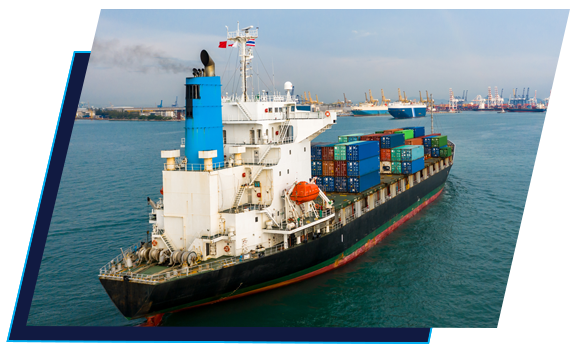
If you’re a manufacturer looking to establish or expand your business in a location that lends itself to exporting goods, you’ve probably looked at the congested mega-ports and thought, “There’s got to be a better way.”
Turns out, there is. And it’s probably closer than you think.
The Port of Wilmington is quickly growing, and businesses in Brunswick County are taking advantage of their easy access to it.
The Port of Wilmington: Real Capacity, Real Speed
Sitting just 26 miles up the Cape Fear River from the open sea, this deep-water facility features 42-foot channel depth, 600,000+ TEU capacity, and seven container cranes that can handle vessels up to 22 containers wide. The North Carolina State Ports Authority has built 284 acres of working port with over 6,740 feet of wharf frontage, including more than 2,600 contiguous feet dedicated to container operations.
For larger operations, the specs matter: you’ve got on-dock rail service through CSX, a million square feet of covered storage, 125 acres of open storage, and 775 refrigerated plugs if you’re moving perishables or temperature-sensitive cargo. The Port of Wilmington’s container terminal runs Navis N4 tracking, and the whole operation is C-TPAT certified. There’s even a 150-acre expansion area available for development if your needs outgrow current capacity.
But here’s what really matters: the port isn’t drowning in backlog. Your freight actually moves when it’s supposed to. The South Gate features a 13-lane interchange specifically designed to keep trucks flowing instead of stacking up for hours. Two secured gate entries mean your carriers aren’t burning daylight waiting to pick up or drop off.
Whether you’re shipping precision manufacturing components, bulk agricultural products, project cargo, or over-dimensional heavy lift materials, the port has the equipment and expertise to handle it. And with Foreign Trade Zone 214 designation, you can potentially reduce, defer, or eliminate import duties, which starts to matter when you’re moving serious volume.
Getting There Is Actually Easy
One of the biggest headaches in exporting is the last mile, or in this case, the last 30 miles. Brunswick County sits in what might be the sweet spot for port access. Most businesses here can have freight on the dock in under an hour via Highway 17, I-140, or I-40.
Got bigger shipments or manufacturing volume that makes sense for rail? CSX runs directly into the port facilities. It’s the kind of setup that makes you wonder why anyone would choose to wrestle with traffic in a major metro area when they could have this kind of straightforward access.
And if your team travels internationally (or you’re courting international clients), you’ve got Wilmington International right here, plus Myrtle Beach and Fayetteville airports within reasonable driving distance. It’s not quite as convenient as having your own private jet, but it’s pretty close.
The Tax Situation Is Kind of Ridiculous (In a Good Way)
North Carolina currently has a 2.5% corporate tax rate. For context, that’s the lowest in the country. And the state has plans to eliminate it entirely by 2029.
This isn’t just us talking: CNBC has ranked North Carolina #1 for business, and Site Selection put it at #2 for business climate in 2022. Those rankings reflect what companies are actually experiencing on the ground: a state government that seems to understand that businesses need room to breathe.
Brunswick County is one of the fastest-growing counties not just in North Carolina, but in the entire country. That growth brings infrastructure improvements, available industrial land, and a local government that actually returns your calls.
The Workforce Question
You can have all the port access in the world, but if you can’t staff your operation, you’re dead in the water. Brunswick County has over 200,000 skilled workers in the region, backed by two universities and three community colleges that run training programs built around what local industries actually need.
Need logistics managers who understand export documentation? They’re here. Technicians who can maintain specialized manufacturing equipment? Here. Engineers who can optimize your production line? Also here.
The community colleges in particular have specialized in creating customized training programs. So if you’re expanding and need people trained on specific equipment or processes, they’ll work with you to make that happen. It’s the kind of partnership that makes scaling operations way less painful than it could be.
Why People Stay
This matters more than you might think. Brunswick County isn’t just a place people move for work. It’s a place they want to live. The coast is right there. Housing costs are still reasonable. Schools in the area routinely get high marks. Traffic is manageable.
Your employees can actually enjoy their weekends instead of spending them stuck in suburban sprawl or recovering from an overpriced, overcrowded city lifestyle. Happy employees stick around. Employees who stick around get better at their jobs. It’s basic, but it works.
For business owners and executives, there’s something to be said for running a company in a place where you can clear your head on a beach or a golf course instead of staring at your email in a high-rise. The work-life balance thing isn’t just HR speak. It’s real, and it affects your bottom line through retention and productivity.
It’s Actually Happening
This isn’t a theoretical pitch. Manufacturing companies are already expanding their export operations through Wilmington. Agricultural producers are shipping to Asia and Europe. Logistics firms are opening distribution centers to handle the growth.
The Brunswick Business & Industry Development team has been working with these companies throughout the process, helping with site selection, navigating permits, connecting with workforce programs, and generally making sure things don’t fall apart during the transition.
Space to Scale
If you need acreage for a serious industrial operation, Brunswick County has megasites ready to go. These aren’t just empty fields. They come with the infrastructure already in place or planned: highway access, rail connections, utilities, and reasonable proximity to the port.
Whether you’re launching something new or relocating an existing operation, the Brunswick BID team can walk through it with you.
So What’s the Move?
If you’re manufacturing products with export potential, or if you’re currently exporting but getting squeezed by logistics costs and delays, it’s worth a conversation. The combination of port access, reasonable costs, available workforce, and actual space to grow is harder to find than it used to be.
Brunswick County isn’t trying to be Charlotte or Raleigh. It’s building something different. A place where mid-sized and growing companies can operate efficiently without all the congestion and cost that comes with major metro areas.
If that sounds like it might fit what you’re trying to build, reach out to the Brunswick Business & Industry Development team today.